
August 28, 2026
SineSemi (中晶新源) 40V Automotive PSGT Enters Volume Production
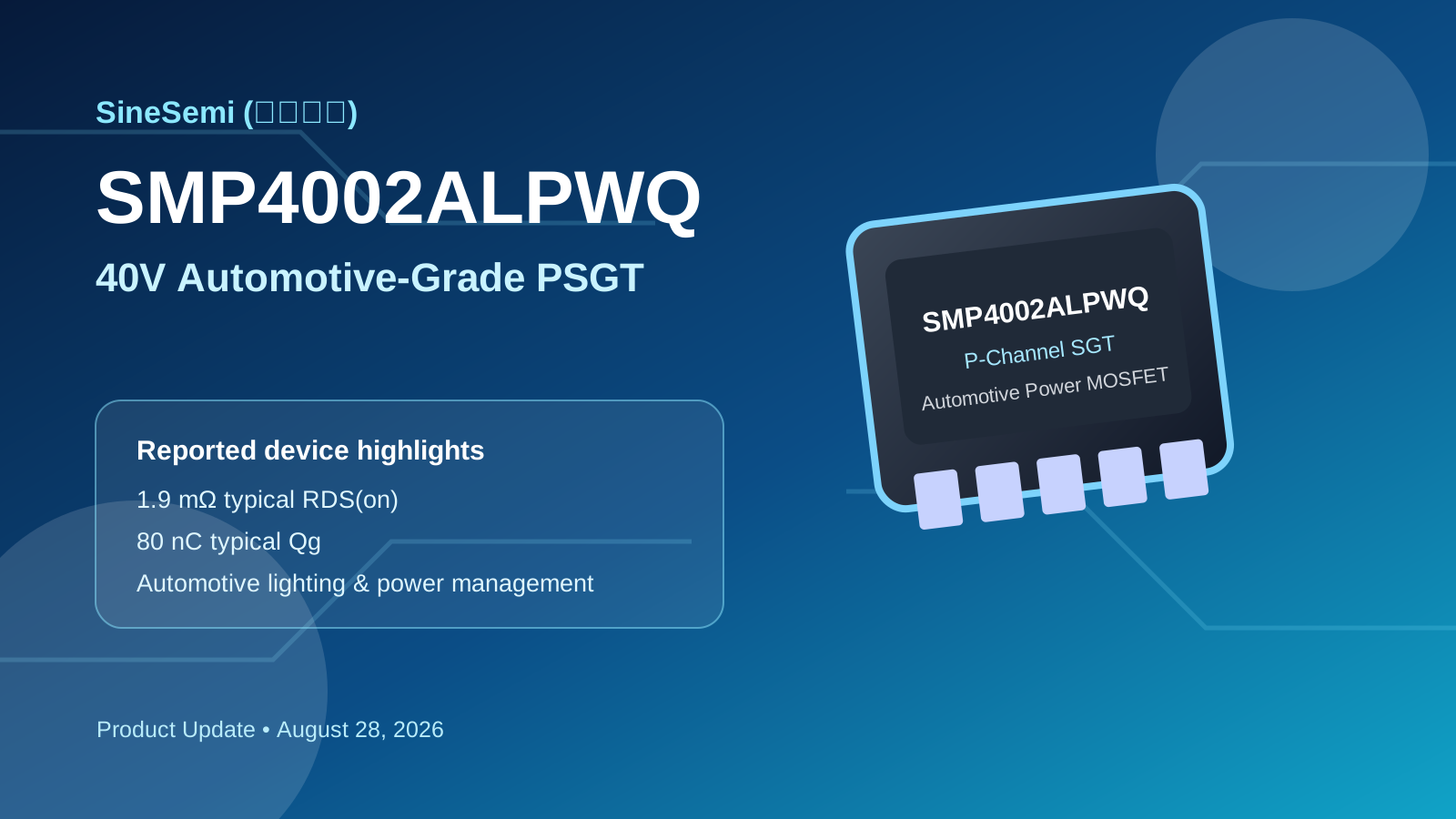
SineSemi (中晶新源) reports that its 40V automotive-grade P-channel SGT MOSFET, SMP4002ALPWQ, has entered volume production with a leading automotive-lighting customer.
SineSemi (中晶新源) has announced that its 40V automotive-grade P-channel Shielded Gate Trench (PSGT) MOSFET, SMP4002ALPWQ, has entered volume production with a leading automotive-lighting customer.
According to SineSemi, the device forms part of its broader 40V–250V PSGT portfolio, which the company reports is now in production. SineSemi also cites strategic support from ChipON Integrated (芯联集成) in the development of its PSGT platform.
Automotive lighting is a system-design problem
In automotive lighting, the MOSFET sits inside a wider power path that must handle vehicle-battery conditions, conversion efficiency, thermal limits, switching behaviour and production reliability at the same time.
SineSemi’s published reference architecture places the SMP4002ALPWQ near the battery input as a high-side switching / protection device, ahead of a boost stage and downstream multi-channel buck LED drivers. That position makes low conduction loss, practical gate drive and transient robustness especially relevant.
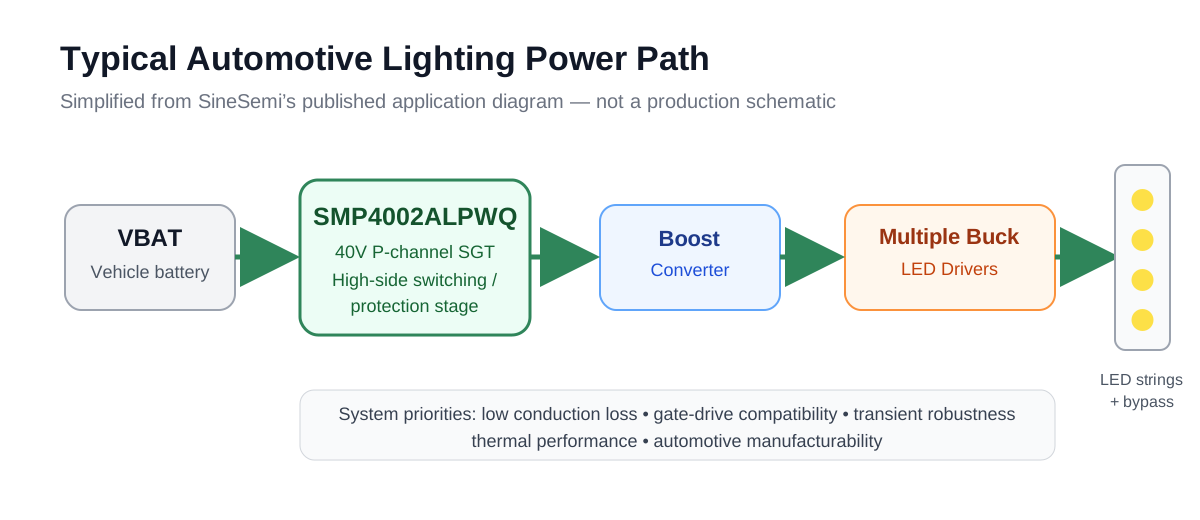
Simplified from SineSemi’s published typical application system diagram. The illustration is for technology context only and is not a production schematic.
Where the SMP4002ALPWQ fits
The SMP4002ALPWQ is a 40V P-channel SGT MOSFET intended for compact automotive power stages. According to SineSemi, its P-channel architecture can support relatively simple high-side control while the optimized SGT structure targets low conduction loss.
SineSemi specifies typical on-resistance of:
- 1.9 mΩ at VGS = -10V
- 3.3 mΩ at VGS = -4.5V
The lower-voltage figure is relevant where the gate is driven from lower-voltage logic or control circuitry, although final gate-drive design should always follow the current device datasheet and actual operating conditions.
Electrical figures reported by SineSemi
SineSemi lists the following characteristics for the SMP4002ALPWQ:
- Typical
RDS(on)of 1.9 mΩ - Typical total gate charge
Qgof 80 nC - Continuous drain current of up to -190 A at Tc = 25°C
- 1,000 mJ single-pulse avalanche energy
- 100% UIS testing for avalanche robustness
These parameters illustrate the device-level trade-off that matters in automotive switching: conduction loss, switching loss, fault robustness and thermal performance have to be considered together rather than optimized independently.
Packaging aimed at automotive manufacturability
The device uses a Wettable Flank package with fused source leads.
SineSemi states that this package arrangement improves current-carrying and thermal performance by approximately 20% and supports 100% AOI automatic optical inspection. The longer lead structure is also intended to improve solder-joint reliability under vibration, temperature cycling and long service life.
Those attributes matter because automotive qualification is not only about the silicon die. Package construction, solder inspection and thermal paths can strongly influence manufacturing consistency and field reliability.
From component choice to system performance
The reference architecture published by SineSemi shows why device selection cannot be separated from the rest of the lighting system.
A low-resistance switch can reduce loss at the battery-facing stage, but the complete design still depends on:
battery transient margin → gate-drive strategy → switching loss → package parasitics → thermal design → downstream converter behaviour
For engineers evaluating the device, the final selection should therefore be based on the current SineSemi datasheet, the required automotive qualification level and the actual load, thermal and fault conditions of the target design.
Technology context
P-channel SGT devices occupy a different role from the high-voltage Superjunction MOSFETs commonly used in offline power conversion. For readers interested in the underlying structures and where the technologies fit:
SGT vs Superjunction MOSFET: What They Are and Why They Serve Different Voltage Ranges
For product information, samples or application discussions relating to automotive-grade SGT MOSFETs, customers can contact Curve Semiconductors through the website.
Technical performance, packaging improvements, volume-production status and customer-adoption statements in this article are based on information supplied by SineSemi (中晶新源). Curve Semiconductors has not independently certified those claims.